
Introduction
For centuries, music has been a uniquely human form of expression, deeply tied to emotion, creativity, and personal experience. Creating a beautiful piece of music, whether it’s a soaring orchestral score or a catchy pop tune, requires immense talent, skill, and inspiration. But what if artificial intelligence could compose music? What if an AI could understand harmony, rhythm, and melody well enough to create original, emotive soundtracks? This is no longer science fiction; it is the reality brought forth by platforms like AIVA (Artificial Intelligence Virtual Artist).
AIVA is a pioneering AI music composer that is transforming the way music is created for films, video games, commercials, and even personal projects. It uses advanced deep learning algorithms to generate original musical pieces, from classical symphonies to modern electronic tracks, in a matter of seconds. This comprehensive guide will take you through everything you need to know about AIVA, exploring its innovative technology, its unique features, and how it is revolutionizing the creative industry. We will explain how AIVA works in simple, easy-to-understand language, showing you how this incredible tool can empower musicians, filmmakers, and content creators alike.
1. What is AIVA? The AI Music Composer
At its core, AIVA is an artificial intelligence that specializes in composing original music. It is one of the most advanced generative AI systems in the field of music.
How AI Learns to Compose Music
AIVA doesn’t just randomly combine notes. It learns by analyzing thousands of existing musical scores from various genres, including classical, pop, rock, and jazz.
- Pattern Recognition: The AI identifies patterns in melody, harmony, rhythm, and musical structure. It learns what makes a piece of music sound “good” or emotionally resonant.
- Deep Learning: AIVA uses deep neural networks, similar to those used in image recognition or natural language processing, to understand and generate music. It builds a complex internal representation of musical theory and aesthetics.
- Original Compositions: Based on what it has learned, AIVA can then generate completely new and original compositions that adhere to musical rules and evoke specific emotions.
Core Features of AIVA
- Generative Power: AIVA can create unique musical pieces from scratch in seconds.
- Emotional Customization: Users can guide AIVA to compose music that evokes specific emotions, such as “sad,” “happy,” “epic,” or “peaceful.”
- Genre Versatility: It can compose in various styles, from classical orchestral to modern electronic and cinematic scores.
- Royalty-Free Music: For many users, the music generated by AIVA can be used without worrying about copyright issues, which is a huge advantage for content creators.
2. Why AIVA is a Game-Changer for Creators
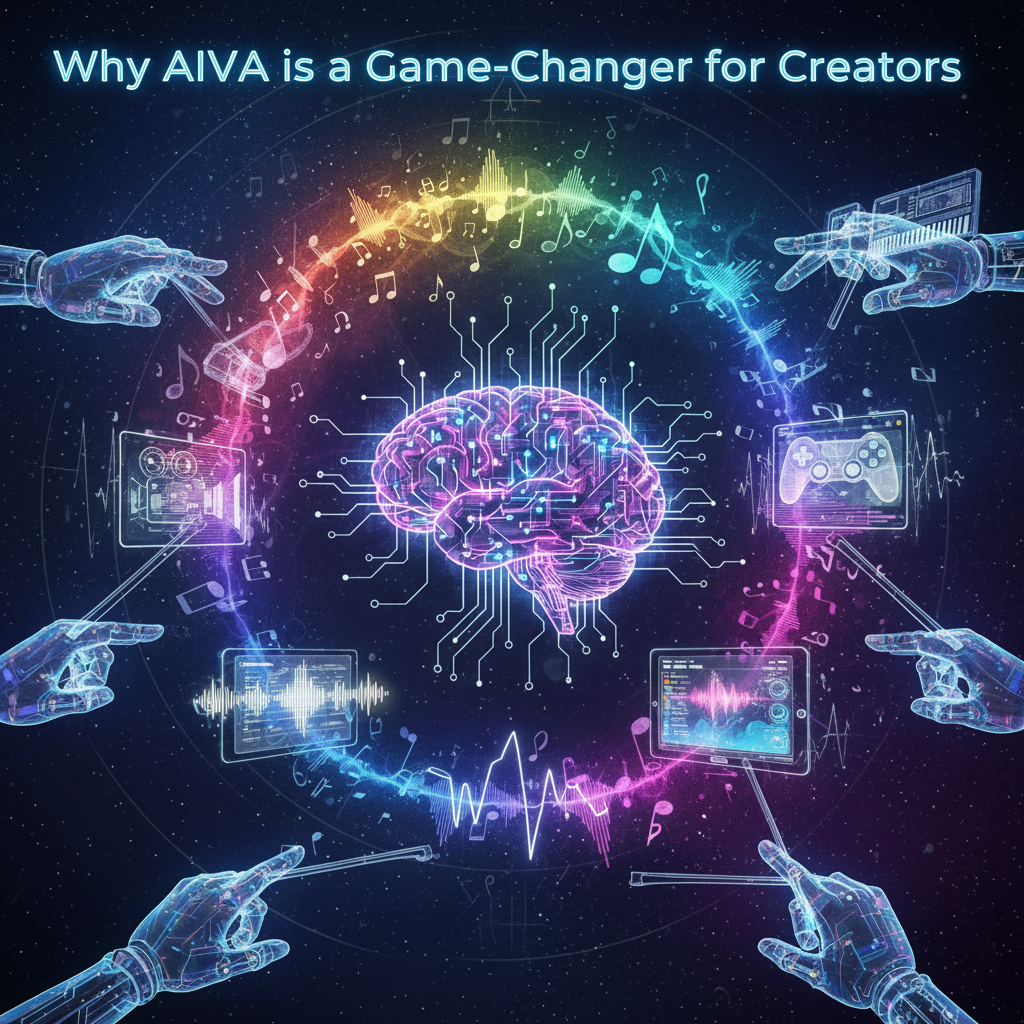
AIVA brings significant advantages to various creative fields, making music creation more accessible and efficient than ever before.
Speed and Efficiency
Composing original music traditionally takes a lot of time and effort, often weeks or even months for a full score.
- Instant Composition: AIVA can generate multiple tracks in different styles and moods within minutes. This speed is invaluable for projects with tight deadlines.
- Time-Saving for Professionals: Filmmakers, game developers, and advertisers can quickly get custom soundtracks without waiting for human composers, speeding up their production cycles.
Accessibility for Non-Musicians
You don’t need to be a trained musician or a composer to use AIVA.
- User-Friendly Interface: AIVA’s platform is designed to be intuitive, allowing anyone to generate music by selecting preferences like mood, genre, and duration.
- Unlocking Creativity: This empowers individuals who might have great ideas for visuals but lack the musical skills to create accompanying soundtracks.
Cost-Effectiveness
Hiring a professional composer can be expensive, especially for indie projects or small businesses.
- Affordable Custom Music: AIVA offers a more affordable way to obtain high-quality, original music, significantly reducing production costs for various projects.
- Royalty-Free Usage: Depending on the AIVA plan, the generated music can often be used royalty-free, meaning no ongoing payments for copyright.
Creative Inspiration and Collaboration
AIVA can also serve as a powerful tool for human composers.
- Overcoming Writer’s Block: When a composer faces a creative block, AIVA can generate ideas or starting points that a human composer can then refine and develop further.
- New Perspectives: It can produce unique musical ideas that a human might not have thought of, leading to innovative collaborations between human and AI.
3. How to Use AIVA: A Step-by-Step Guide
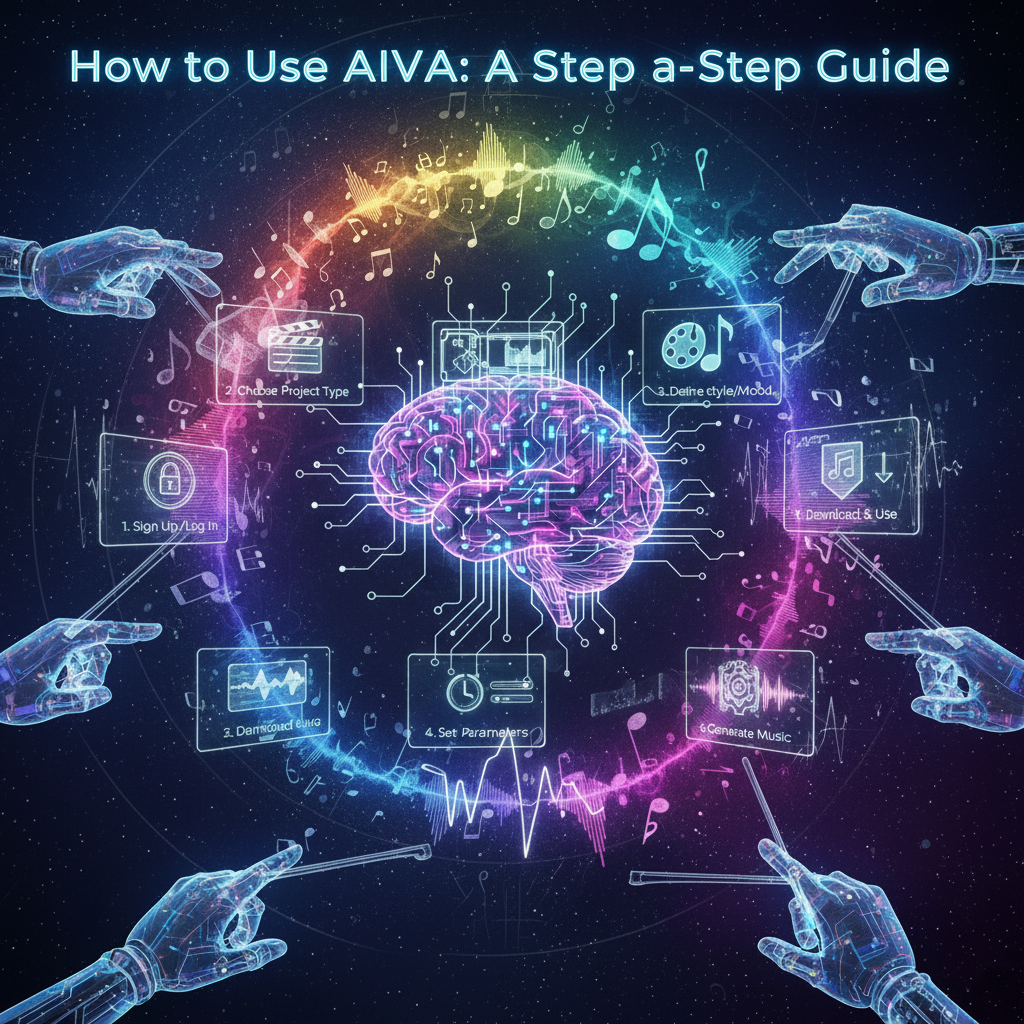
Getting started with AIVA is surprisingly simple. Here’s a basic workflow:
H3: Step 1: Sign Up and Choose Your Plan
- Visit the AIVA website and create an account.
- AIVA offers different plans, including a free tier (with some limitations) and paid subscriptions that unlock more features and commercial rights.
H3: Step 2: Define Your Music Parameters
Once logged in, you’ll be guided through a simple interface to set your preferences:
- Style/Genre: Choose a musical style (e.g., Cinematic, Pop, Electronic, Ambient).
- Mood/Emotion: Select the emotional tone you want (e.g., Happy, Sad, Tense, Relaxing, Epic).
- Duration: Specify how long you want the piece of music to be (e.g., 30 seconds, 2 minutes).
- Key (Optional): If you have musical knowledge, you can even select the musical key.
H3: Step 3: Generate and Customize
- Click the “Generate” button. AIVA will then create several unique compositions based on your parameters.
- Listen and Select: You can listen to the generated tracks and choose the ones you like best.
- Customize (Optional): For advanced users, AIVA allows for some customization. You can modify specific sections, re-generate parts, or even upload your own melodies to guide the AI.
H3: Step 4: Download and Use Your Music
- Once you’re satisfied, you can download the music in various formats (e.g., WAV, MP3, MIDI).
- Integrate: The music is now ready to be used in your video projects, games, podcasts, or any other content.
4. AIVA’s Technology Under the Hood
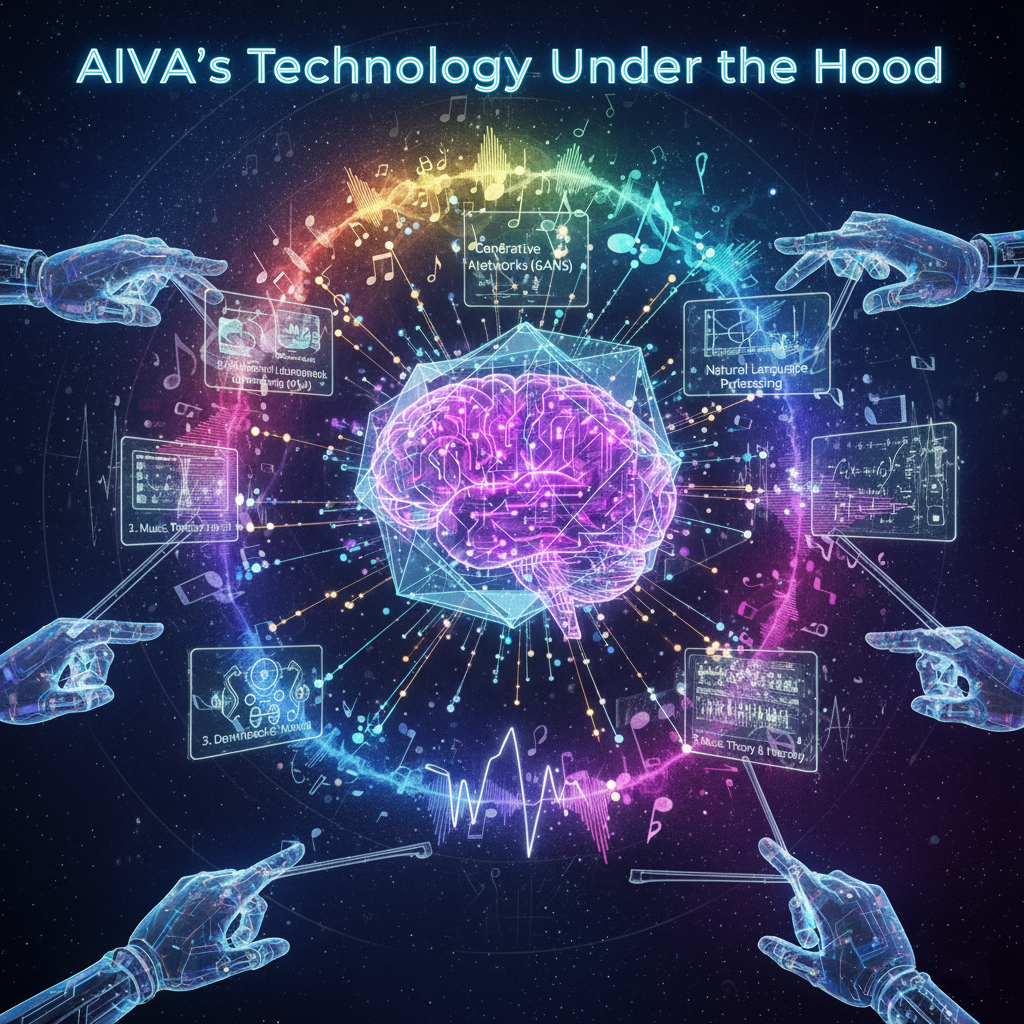
AIVA’s sophisticated capabilities are built on cutting-edge AI research.
Deep Learning and Recurrent Neural Networks (RNNs)
Early versions of music AI often used Recurrent Neural Networks (RNNs) or Long Short-Term Memory (LSTM) networks. These networks are good at handling sequences of data, which is perfect for music, as notes unfold over time. They learn to predict the next note or chord based on the previous ones.
Generative Adversarial Networks (GANs) and Transformers
More advanced systems, including aspects of AIVA’s engine, likely leverage more sophisticated architectures:
- GANs: Generative Adversarial Networks involve two neural networks competing against each other – one generates music, and the other tries to tell if it’s real or AI-generated. This competition helps the generative network create incredibly realistic music.
- Transformers: Similar to their use in natural language processing (like ChatGPT), Transformer models are excellent at understanding long-range dependencies in data, which is crucial for musical structure and thematic development across an entire piece.
AIVA’s power comes from training these complex networks on massive datasets of musical compositions, allowing them to learn the intricate rules and aesthetics of music.
5. Frequently Asked Questions (FAQs)
Is AIVA completely free to use?
AIVA offers a free tier with limited features and usage. For full functionality, higher quality downloads, and commercial use rights, you will need a paid subscription.
Can AIVA replace human composers?
AIVA is a tool, not a replacement. It can generate background music quickly, but it still lacks the deep emotional understanding, life experience, and deliberate artistic intent of a human composer. It’s best seen as a powerful assistant or collaborator.
How unique is the music generated by AIVA?
The music generated by AIVA is designed to be original and unique. Because the AI composes based on patterns rather than copying, it creates new combinations of melodies, harmonies, and rhythms.
Can I use AIVA-generated music for commercial projects like YouTube videos or films?
Yes, but this depends on your AIVA subscription plan. Paid plans typically grant you commercial rights and royalty-free usage. Always check the terms of your specific plan.
Does AIVA generate vocals or lyrics?
No, AIVA currently focuses on instrumental music generation. It does not generate vocals or lyrics.
Conclusion
In conclusion, AIVA (Artificial Intelligence Virtual Artist) represents a significant leap forward in the field of generative AI for music. By harnessing the power of deep learning and sophisticated neural networks, AIVA can compose original, emotive, and genre-specific music with remarkable speed and efficiency. It has opened up new avenues for creativity, offering an invaluable tool for filmmakers, game developers, advertisers, and even individual content creators.
AIVA is not just a technological marvel; it is a democratizing force in music creation. It empowers both seasoned professionals to overcome creative blocks and non-musicians to bring their projects to life with custom soundtracks. As AI continues to evolve, platforms like AIVA will undoubtedly play an increasingly important role in shaping the future of art and creativity, proving that the collaboration between human ingenuity and artificial intelligence can lead to truly harmonious results.