
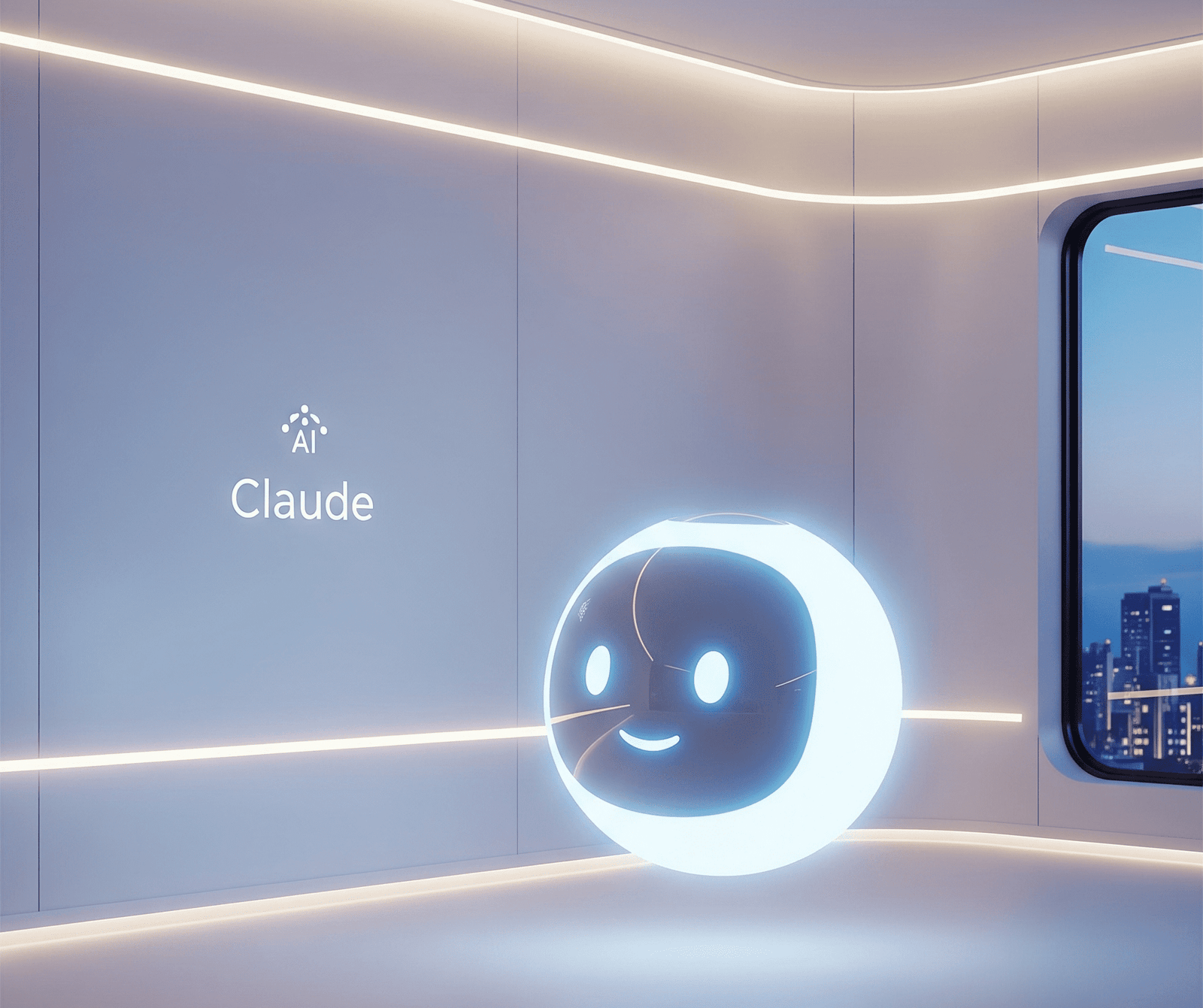
Introduction
In the rapidly evolving world of artificial intelligence, large language models (LLMs) are constantly pushing the boundaries of what’s possible. While models like ChatGPT and Google Gemini have captured the public imagination, a powerful and principled competitor has quietly emerged: Claude. Developed by the AI research company Anthropic, Claude is an AI assistant built on a foundation of safety, ethics, and a deep commitment to being helpful, harmless, and honest. Unlike many of its rivals, which are trained on vast amounts of internet data, Claude’s creators have focused on a unique approach to ensure that the AI is not only intelligent but also trustworthy and reliable.
Claude has quickly gained recognition for its exceptional performance in a variety of tasks, from complex reasoning and creative writing to code generation and in-depth analysis. Its latest models, part of the Claude 3 family, have set new industry benchmarks, proving that a strong ethical foundation can lead to superior results. This comprehensive guide will take a deep dive into what makes Claude so unique, exploring its core philosophy, its groundbreaking models, and its real-world applications. We will explain everything in simple, easy-to-understand language.
1. What is Claude AI? The AI with a Conscience
At its heart, Claude is a family of powerful large language models developed by Anthropic, a company founded by former members of OpenAI. Its core mission is to create safe and beneficial AI that is helpful to humanity.
The Core Philosophy: Constitutional AI
What sets Claude apart is its unique development approach, known as Constitutional AI.
- Human-Centered Rules: Instead of relying on a human team to constantly monitor and filter AI outputs, Anthropic created a set of principles or a “constitution” for Claude to follow. These principles are based on a set of rules about what is helpful, harmless, and ethical.
- Self-Improvement: The AI is trained to evaluate its own responses against this constitution and correct itself. This allows it to learn from its mistakes and become more aligned with human values over time, without the need for constant human supervision.
- Safety and Honesty: This process results in an AI that is less likely to produce harmful or biased content. It is designed to refuse requests that are unethical and to provide more truthful and honest answers.
This principled approach is what gives Claude its distinct reputation for being a reliable and safe AI assistant.
2. The Claude 3 Family: A New Standard in AI
The launch of the Claude 3 family marked a major turning point in the AI world. This family consists of three powerful models, each designed for a specific purpose.
Claude 3 Opus: The Most Powerful
- Performance: Opus is the most intelligent and powerful model in the Claude 3 family. It outperforms many of its rivals on a wide range of industry benchmarks for reasoning, knowledge, and problem-solving.
- Complex Tasks: It is designed for highly complex tasks, such as market analysis, scientific research, and advanced coding. It is a top-tier model for anyone who needs to solve a difficult problem.
- Intelligence: Opus shows a high level of understanding and can handle long, multi-step instructions with great accuracy.
Claude 3 Sonnet: The Balanced Performer
- Speed and Intelligence: Sonnet is a great balance between intelligence and speed. It is faster than Opus and is designed to handle most everyday tasks with great efficiency.
- Cost-Effective: It provides excellent performance at a lower cost, making it a perfect choice for businesses and developers who need a reliable and fast AI assistant.
- Everyday Use: Sonnet is ideal for data analysis, information retrieval, and general knowledge tasks.
Claude 3 Haiku: The Fastest and Most Efficient
- Blazing Speed: Haiku is built for speed. It is one of the fastest AI models on the market, capable of answering simple queries almost instantly.
- Efficiency: It is also the most cost-effective model in the family, making it perfect for large-scale, low-latency applications like chatbots and content moderation.
- Quick Answers: Haiku is designed to provide quick, accurate answers without any unnecessary delay.
3. Claude’s Key Differentiators
Beyond its constitutional AI approach, Claude has several other features that set it apart from the competition.
The Power of Long Context Windows
A “context window” is the amount of information an AI model can remember and process at one time.
- Massive Memory: Claude 3 models have an extremely long context window, which allows them to read and understand very large documents, books, or entire codebases.
- In-Depth Analysis: This feature is invaluable for tasks that require analyzing a lot of information, like summarizing a detailed report or understanding a complex research paper.
Unmatched Safety and Honesty
Thanks to Constitutional AI, Claude is designed to be very honest and transparent.
- Less “Hallucination”: It is less likely to make up facts or provide incorrect information, a common problem known as “hallucination” in other AI models.
- Refusing Unethical Requests: It is trained to politely decline requests that are harmful, biased, or violate its ethical constitution. This makes it a safer tool to use.
Multimodal Capabilities
The Claude 3 family can process and understand both text and images.
- Image Analysis: You can upload an image and ask Claude to describe it, analyze a chart, or answer questions about the content of the image.
- Visual Data: This is a powerful feature for tasks that involve visual data, like scientific analysis, medical imaging, or business reports.
4. Use Cases and Real-World Applications
Claude’s intelligence and safety make it a valuable tool for a wide range of applications.
For Businesses and Developers
- Customer Service: Sonnet and Haiku can be used to power fast and accurate chatbots for customer support.
- Data Analysis: Opus can analyze large datasets and provide valuable insights for business intelligence.
- Code Generation: Claude is an excellent tool for writing code, debugging, and explaining complex programming concepts.
For Content Creation and Research
- Content Summarization: Researchers can use Claude to summarize long academic papers, saving countless hours of reading.
- Creative Writing: Claude’s ability to understand context and emotion makes it a great tool for creative writing, from drafting articles to writing scripts.
- Personal Assistant: Individuals can use Claude to help with daily tasks like writing emails, planning trips, or brainstorming ideas.
5. Frequently Asked Questions (FAQs)
Is Claude AI free to use?
Anthropic offers a free version of Claude. However, for access to the most powerful models like Opus and for higher usage limits, you will need a paid subscription.
Who created Claude AI?
Claude was created by the AI research company Anthropic, which was founded by a group of former leaders from OpenAI.
What is the difference between Claude and ChatGPT?
While both are powerful LLMs, Claude’s main difference is its focus on Constitutional AI, which makes it a very safe, honest, and reliable model. Claude also has a different context window and is often seen as a stronger competitor in complex reasoning tasks.
What kind of data was Claude trained on?
Claude was trained on a massive dataset of publicly available information. Anthropic is also very transparent about its training methodology and focuses on filtering out harmful or biased data.
Does Claude have a public API for developers?
Yes, Anthropic offers a public API for developers, which allows them to integrate Claude’s power into their own applications and services.
Conclusion
In conclusion, Claude is more than just another AI assistant; it is a testament to the idea that safety and intelligence can go hand in hand. Through its unique Constitutional AI approach, Anthropic has created a family of powerful models that are not only highly capable but also deeply trustworthy. From the powerful Opus to the fast and efficient Haiku, Claude offers a solution for every need, from complex research to daily tasks.
By prioritizing ethical development and providing a truly helpful and honest AI, Claude is setting a new standard for the industry. It’s a tool that empowers us to be more productive, creative, and efficient, all while offering a new level of confidence and safety in our interactions with artificial intelligence.