

Introduction
In the world of artificial intelligence and machine learning, progress is incredibly fast. Every day, new research papers are published, introducing groundbreaking models and techniques. However, for a long time, there was a major problem: it was very difficult to verify or build upon this research. A paper would describe a new method in detail, but the code used to run the experiments was often not available. This created a huge gap between theory and practice, slowing down the entire research community. It was like getting a recipe without the instructions on how to cook it.
This is where Papers with Code steps in. Launched in 2018, Papers with Code is a free and open-source platform that aims to solve this problem. Its mission is simple but powerful: to create a central hub that links academic research papers with their corresponding code implementations. By doing this, it makes a paper’s findings more transparent, easier to reproduce, and faster to build upon. This comprehensive guide will take you through everything you need to know about Papers with Code, from its core features to how it has changed the AI landscape.
1. What is Papers with Code?

At its core, Papers with Code is a website and a database that connects machine learning papers with the code that implements them.
Bridging the Gap Between Theory and Practice
The platform’s main goal is to improve the reproducibility of AI research. In science, reproducibility means that if another researcher follows the same steps, they should get the same results. For many years, this was a major issue in AI. Papers with Code solves this by:
- Making Code Accessible: It links to GitHub repositories or other platforms where the code is hosted.
- Verifying Links: The community helps to verify that the code actually matches the paper.
- Organizing Research: It categorizes papers by topic, task, and method, making it easy to find relevant work.
The Core Components
Papers with Code has three main parts:
- The Papers: A database of thousands of research papers from major conferences and archives like arXiv.
- The Code: Links to open-source codebases (mostly on GitHub) that implement the methods from the papers.
- The Community: A group of volunteers who help keep the database updated, add new papers, link them to code, and correct information.
This collaborative approach makes Papers with Code a reliable and up-to-date resource for everyone.
2. Why is Papers with Code a Game-Changer?

Papers with Code is not just another website. It has fundamentally changed the way the AI community operates.
Ensuring Reproducibility
Before Papers with Code, if you wanted to reproduce a paper’s results, you had to read the entire paper, try to understand the exact details of the experiment, and then write the code from scratch. This was a long and difficult process. Now, you can simply click a link, download the code, and run it. This saves countless hours and makes it possible for everyone to verify and build on new research.
Accelerating Research and Learning
For researchers, the platform is a massive time-saver. You can quickly find the latest papers on a specific topic, see their results, and get access to the code.
- For a Student: It’s an incredible learning tool. You can read a paper about a new algorithm and then immediately look at a working implementation to understand how it’s done in practice.
- For a Developer: It helps you find the right code for your project. You can find a state-of-the-art model for, say, object detection, and get the code to integrate it into your application without a huge effort.
A Central Hub for the Community
Papers with Code brings the community together. It provides a common ground where researchers, students, and developers can connect with each other’s work. This open, collaborative environment encourages more innovation and faster progress in the field.
3. How to Use Papers with Code
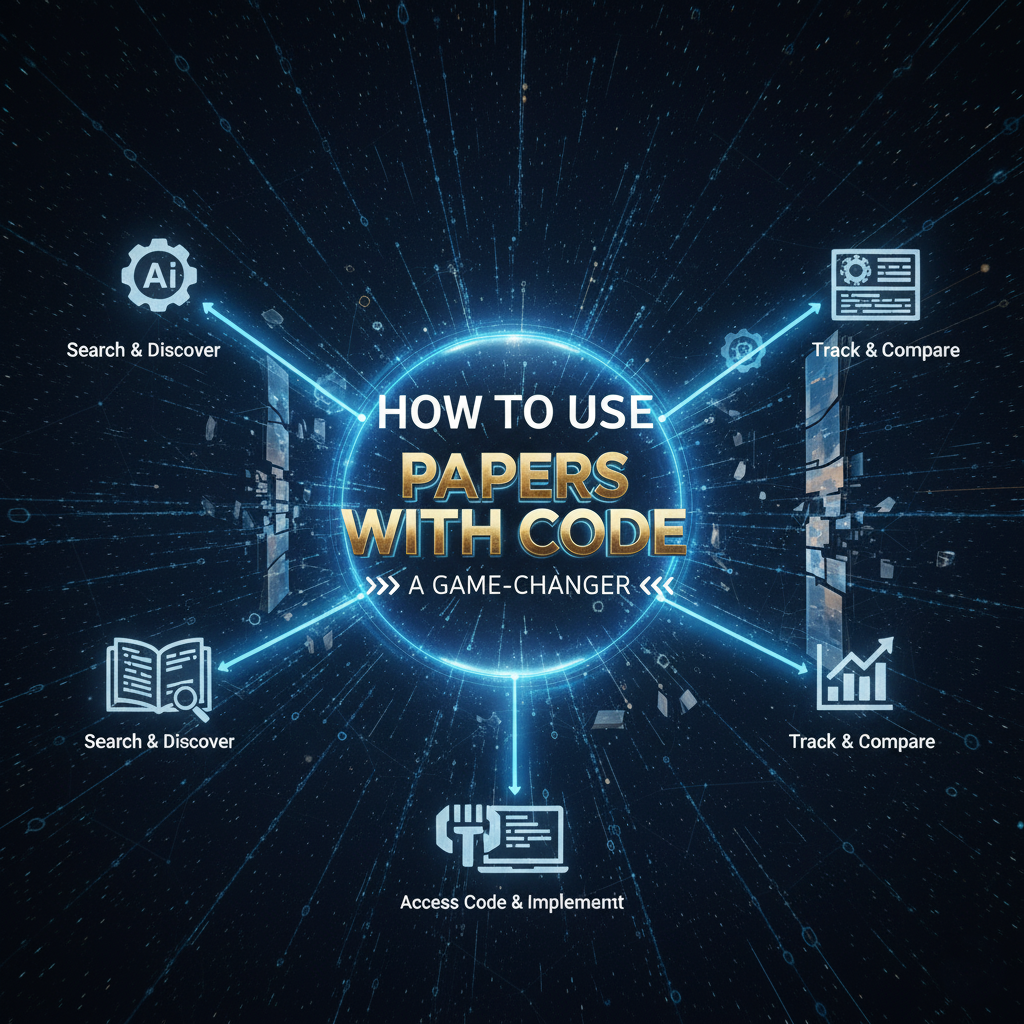
Using Papers with Code is very intuitive. The platform is designed to be easy to navigate.
Finding a Paper with Code
You can use the search bar to find a paper by its title, author, or keywords.
- Example: Searching for “transformer” will show you all the papers and codebases related to the Transformer architecture.
- Once you find a paper, you can see a “View Paper” button that links to the original document, and a “View Code” button that links to the GitHub repository.
Exploring a Topic or Task
One of the best features of Papers with Code is its categorization.
- You can browse by Task (e.g., Image Classification, Text Generation).
- You can browse by Method (e.g., Convolutional Neural Networks, Reinforcement Learning).
- This is a great way to discover new research in a specific area you are interested in.
Submitting Your Own Paper and Code
If you are a researcher, you can submit your own paper and code. The process is simple:
- Log in to the website.
- Provide the link to your paper (e.g., from arXiv).
- Provide the link to your code repository.
- The community will review your submission to ensure it is accurate.
This encourages researchers to make their work open and accessible.
4. The Papers with Code Ecosystem
Papers with Code provides more than just links. It has built several key features that add immense value.
State-of-the-Art (SOTA) Tables
The SOTA tables are a major highlight of the platform. For a specific task (like object detection on a particular dataset), the SOTA tables show the best-performing models.
- Leaderboards: These tables act like leaderboards, ranking models by their performance metrics.
- Reproducibility: You can see which model is the current state-of-the-art and, most importantly, you can click on the link to see its code.
- This is extremely useful for researchers who want to compare their new model to the best existing ones.
Datasets and Methods
Papers with Code also provides detailed pages for datasets and machine learning methods.
- Dataset Pages: You can find information about a dataset, including its size, purpose, and a list of all papers that have used it.
- Method Pages: These pages explain a specific technique (like “Attention”) and list all the papers that have applied it, giving you a deep understanding of its usage.
The Role of the Community
The entire platform is powered by the community. Volunteers add papers, link code, and update the SOTA tables. This collaborative approach ensures that the information is always fresh and accurate.
5. Frequently Asked Questions (FAQs)
Is Papers with Code a free service?
Yes, Papers with Code is completely free to use. It is an open-source project and is now owned by Meta (formerly Facebook) but remains a public resource.
Where does Papers with Code get its research papers from?
It scrapes papers from major open-access archives like arXiv, as well as from top AI conferences and journals like NeurIPS, ICML, and CVPR.
Can I trust the code linked on the platform?
The platform relies on community verification. While it’s generally reliable, it’s always a good practice to review the code yourself before using it in a serious project.
How can I contribute to Papers with Code?
You can contribute by adding new papers, linking them to their code, and helping to update the SOTA tables. You can also report any errors or broken links.
Is Papers with Code useful for beginners in AI?
Yes, absolutely. It’s one of the best resources for beginners to see how theoretical concepts from papers are implemented in real code, which is an invaluable learning experience.
Conclusion
In conclusion, Papers with Code has emerged as a vital tool in the AI research ecosystem. By bridging the gap between academic papers and practical code, it has dramatically improved the reproducibility of research, accelerated the pace of innovation, and fostered a more open and collaborative community.
For anyone involved in machine learning, whether you are a seasoned researcher, a curious student, or a developer building new applications, Papers with Code is an indispensable resource. It is not just a repository; it is a testament to the power of open collaboration and a key driver of progress in artificial intelligence.